The planning decisions that shape a multi family project long before the first machine arrives, and a practical checklist to work through during pre construction.
The most expensive decisions on a multi family project are usually made before any work begins on site. Budget, schedule, constructability, and trade coordination are all easier and cheaper to shape during pre construction, when changes live on paper rather than in the field. This checklist walks through the planning that tends to pay off most for developers building multi family and townhouse projects in BC.
Key takeaways
- Pre construction is where budget and schedule are genuinely shaped, because changes are inexpensive before field work starts.
- A constructability review early can surface conflicts in the drawings before they become costly site problems.
- Soil information, long lead items, and trade sequencing are common sources of late surprises that planning can address up front.
- Bringing construction input into planning, rather than only after drawings are final, tends to produce more realistic budgets and schedules.
Why pre construction earns its keep
Once crews are mobilized, every change carries a ripple of cost and time. A revision that would have been a quick redraw during planning can mean rework, resequencing, and idle trades once a project is underway. Investing in pre construction planning is really about moving decisions to the stage where they are cheapest to make and easiest to get right.
A pre construction checklist
The items below are a practical starting point. Not every project needs all of them, but each is worth a deliberate decision rather than an assumption.
Site and ground
- Obtain a geotechnical report and understand what the soil means for foundations and excavation.
- Confirm site access, staging, and how material will move on and off the lot.
- Identify existing structures, services, or obstructions that affect the early stages.
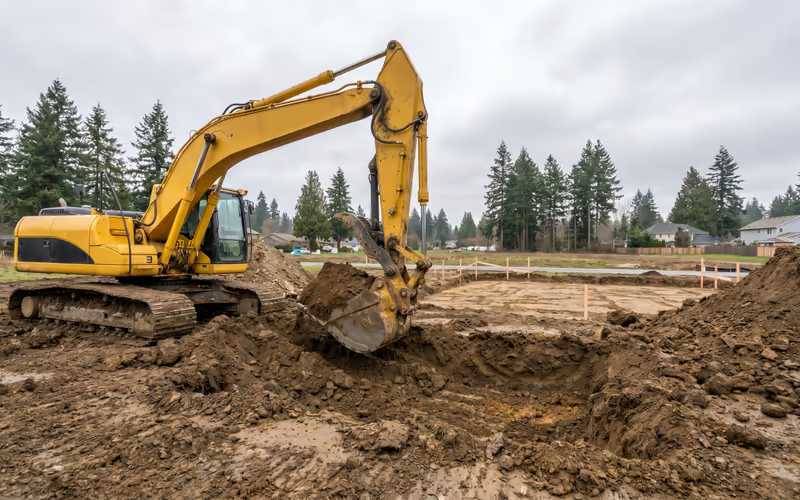
Understanding the ground early connects directly to realistic excavation budgeting, since soil and disposal are among the largest variables in site work.
Drawings and constructability
- Run a constructability review to catch conflicts between disciplines before they reach the field.
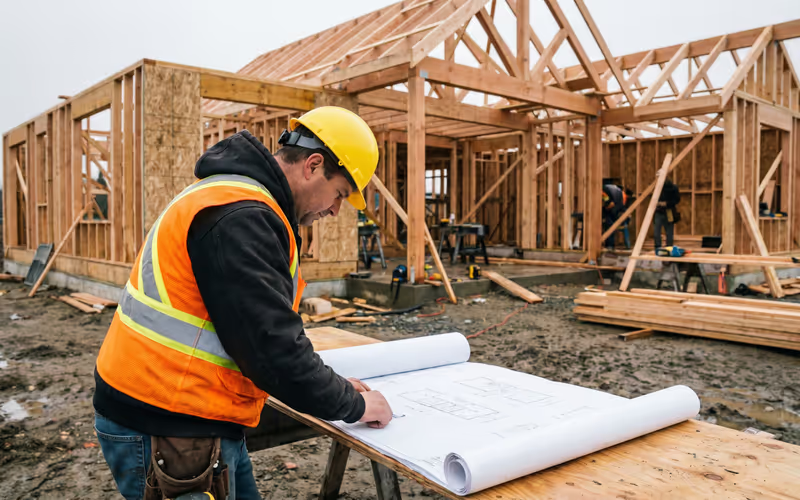
- Confirm structural details, including shear and hold down requirements, are clear and coordinated.
- Resolve open design questions while they are still inexpensive to change.
Budget and scope
- Build the budget on a clearly defined scope, with allowances called out explicitly.
- Decide how unforeseen conditions will be handled and priced.
- Pressure test the budget against comparable recent projects rather than optimistic assumptions.
Schedule and sequencing
- Map the trade sequence, especially the hand offs between excavation, forming, and framing.
- Identify long lead materials and order points early.
- Plan inspection windows so the schedule does not stall waiting on sign offs.
Team and coordination
- Confirm who holds each responsibility and who the day to day points of contact are.
- Agree on how progress and risk will be reported through the project.
- Bring construction input into planning so the people who build the project help shape how it is sequenced.
BC-specific regulatory items developers should confirm early
Some planning steps are specific to building in British Columbia and carry enough lead time to warrant early attention.
HPO enrollment and warranty registration
For new residential construction, the Homeowner Protection Act requires that most new homes be covered by third party home warranty insurance before occupancy. Developers and builders should confirm HPO enrollment and warranty coverage before breaking ground, since some municipalities will not issue building permits without this in place. Enrolled builders can verify their registration status with BC Housing.
Rezoning and development permit timing
If the project involves rezoning, a development permit, or variance applications, these approvals typically need to be in hand before a building permit is issued. Municipal approval timelines vary. Surrey, Langley, and Burnaby each have their own processes and current backlogs. Confirming permit staging early prevents the situation where drawings are complete but approvals are still in queue, which can stall a project for months.
WorkSafeBC registration and site safety
Before any work begins on site, the owner or prime contractor should confirm WorkSafeBC registration is current. For multi family and larger residential projects, a site-specific safety plan is required. This plan addresses hazards, emergency procedures, and subcontractor coordination. Having this in place at the start of the project, rather than assembling it under pressure after mobilization, reduces risk and keeps inspections smooth.
Utility locates and service notifications
BC One Call (1-800-474-6886) should be contacted before any digging to locate underground utilities. Service connection planning, including temporary power, water, and sewer access during construction, needs to be coordinated with the relevant utilities early, since lead times for temporary service connections can extend the pre construction phase if left late.
Long-lead procurement and material planning
Some materials and systems require ordering well ahead of when they are needed on site. Structural steel, windows, specialty mechanical equipment, and certain engineered wood products can have lead times that, if not planned for, will interrupt the construction schedule regardless of how well everything else is managed.
The time to identify long-lead items is during pre construction, while the drawings are still being finalized. A preliminary procurement schedule that flags what needs to be ordered and when, mapped against the construction schedule, is a straightforward way to prevent delivery gaps.
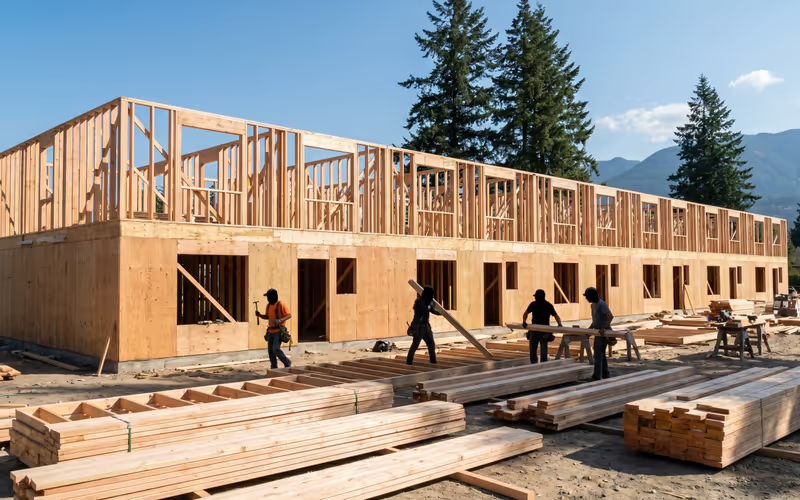
For multi family framing specifically, the engineered floor and roof systems need to be coordinated with the structural engineer and ordered once the design is confirmed. Any design changes after ordering create either waste or schedule delays.
Value engineering during pre construction
Pre construction is the right time to examine the design for cost savings that do not affect the quality or function of the building. This process, sometimes called value engineering, looks at materials, systems, and sequences to identify where less expensive options deliver equivalent performance.
Common areas where value engineering produces results on multi family projects include: structural framing specifications, where small changes to lumber grades or engineered systems can reduce material cost; mechanical layouts, where coordination early can reduce the number of penetrations and trades involved; and exterior envelope systems, where product choices made during design have long-term maintenance implications.
The key is that value engineering is useful during pre construction and counterproductive once construction is underway, when changes carry real cost. Committing to this review during planning is where it earns its keep.
Expanded pre construction checklist
Site and geotechnical
- Obtain and distribute geotechnical report to the project team.
- Confirm water table depth and whether dewatering will be required.
- Identify adjacent structures and confirm shoring requirements with the geotechnical engineer.
- Confirm haul routes and approved disposal locations for excavated material.
- Order BC One Call utility locate before any site work begins.
- Review environmental assessment if the site has prior industrial use.
Regulatory and approvals
- Confirm HPO enrollment and third party home warranty coverage is in place.
- Confirm rezoning, development permit, and variance approvals are issued.
- Confirm building permit is issued or understand its expected date.
- Register with WorkSafeBC and prepare site safety plan.
- Coordinate temporary service connections with BC Hydro, Fortis, and the municipality.
Drawing review and constructability
- Complete constructability review with the building team present.
- Confirm structural drawings including shear walls, hold downs, and connection details are resolved.
- Coordinate architectural and structural drawings against mechanical and electrical.
- Complete any value engineering review while the design is still flexible.
- Confirm all consultant drawings are at a stage suitable for permit and for pricing.
Budget detail and pricing
- Build the budget on a defined scope with allowances identified and labelled.
- Confirm how unforeseen conditions (soil, buried obstructions, groundwater) are priced.
- Complete a like for like comparison of trade quotes based on the same drawings and assumptions.
- Establish a contingency aligned with the stage of design development and site risk.
Schedule and procurement
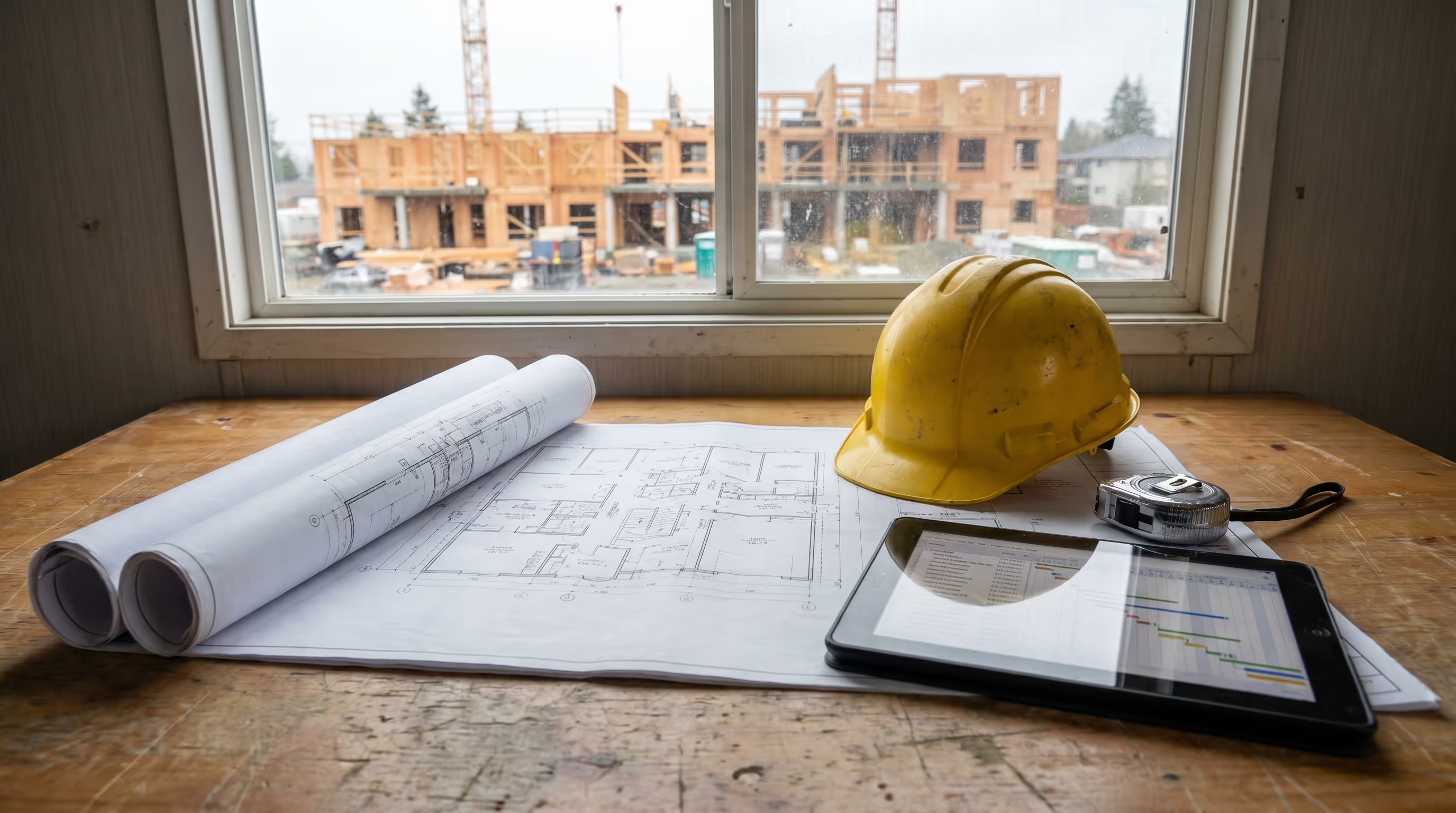
- Prepare a construction schedule mapping all trade sequences.
- Identify long-lead items and confirm order points to match the construction schedule.
- Confirm forming, framing, and services are sequenced as a coordinated plan, not independently.
- Map inspection and occupancy permit stages into the schedule.
Team and communications
- Confirm points of contact for each discipline and trade.
- Agree on frequency and format for progress reporting.
- Establish how RFIs, drawing revisions, and change orders will be managed.
- Bring construction input into planning so sequencing decisions reflect field realities.
Where developers most often get surprised
Even well planned projects share a few common sources of late surprises. Each is easier to handle in pre construction than on site:
- Ground conditions that differ from assumptions, which a geotechnical report helps anticipate.
- Drawing conflicts that surface during construction rather than during a review.
- Long lead items ordered too late to match the build sequence.
- Trade hand offs, particularly between forming and framing, that were not sequenced as a single plan.
- Regulatory steps that were not confirmed early enough, such as HPO enrollment or utility connections.
Planning around these does not eliminate every risk, but it moves the predictable ones out of the field, where they are most expensive, and into planning, where they are manageable. Strong coordination here is the essence of good project management.
Frequently asked questions
Why is pre construction so important for multi family projects?
Because the decisions that drive budget and schedule are largely made before site work begins. Changes are inexpensive on paper and expensive once crews are mobilized, so planning is where developers have the most leverage.
What is a constructability review?
It is a review of the drawings and plan to identify conflicts and build challenges before they reach the field. Catching these early avoids rework and resequencing during construction.
When should construction input come into the planning process?
As early as practical. Bringing builders into planning, rather than only after drawings are final, tends to produce more realistic budgets and schedules and surfaces sequencing issues sooner.
What most often surprises developers during a build?
Ground conditions that differ from assumptions, drawing conflicts found late, long lead items ordered too late, and poorly sequenced trade hand offs are the common ones. Pre construction planning addresses each of them.
Planning your next project
Jas Construction Ltd. has supported multi family and townhouse projects across the Lower Mainland since 1999, including pre construction planning and coordination across excavation, forming, and framing. If you are early in planning a build, we are glad to bring construction input to the table while changes are still inexpensive.
Jas Construction Ltd.
A Surrey, BC construction & excavation group serving the Lower Mainland since 1999.
Let's talk about your next BC build.
Tell us about your scope, timeline and location. We'll send back honest feedback and a quote.