What actually drives excavation pricing on Lower Mainland projects, the main cost factors to plan for, and why a site visit matters more than any online estimate.
Excavation is one of the first hard costs on any build, and it is also one of the hardest to price from a desk. Two lots a block apart can carry very different numbers depending on soil, slope, access, and what the drawings ask for below grade. This guide walks through the factors that move excavation pricing on Lower Mainland projects so you can budget with realistic expectations.
A short note before the numbers. Every figure below is general industry context, not a quote. Real pricing depends on your site, your drawings, and current conditions, so treat ranges as a starting point for conversation rather than a commitment.
Key takeaways
- Excavation pricing is driven mostly by soil conditions, volume of material, disposal, access, and the scope below grade, not by a single per hour or per yard rate.
- Unknowns like groundwater, buried obstructions, and unsuitable soil are the most common reasons a number changes after work starts.
- A geotechnical report and a site visit reduce surprises far more than any online calculator.
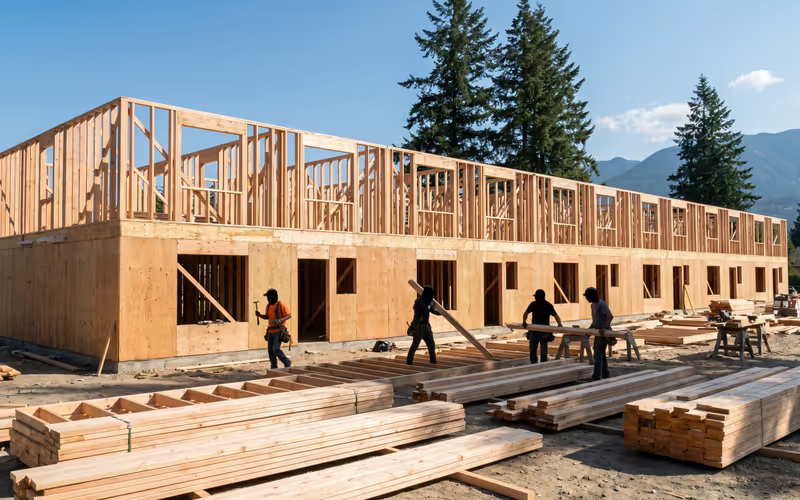
- For multi unit and townhouse work, coordination with forming and services matters as much as the dig itself.
What you are actually paying for
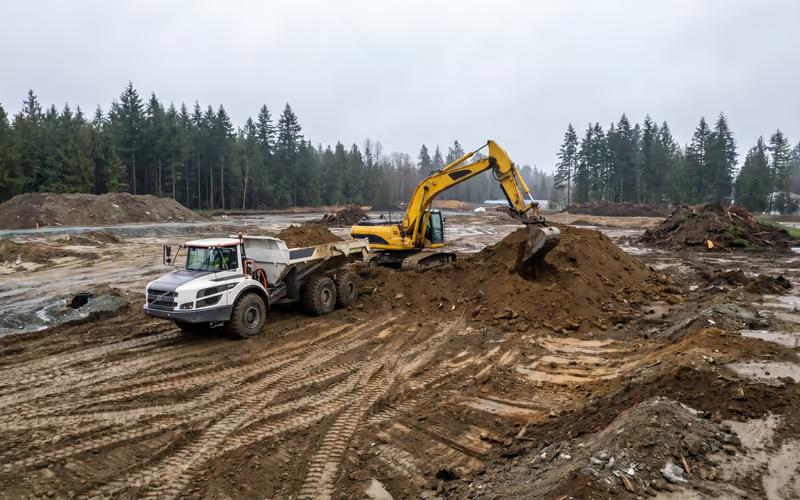
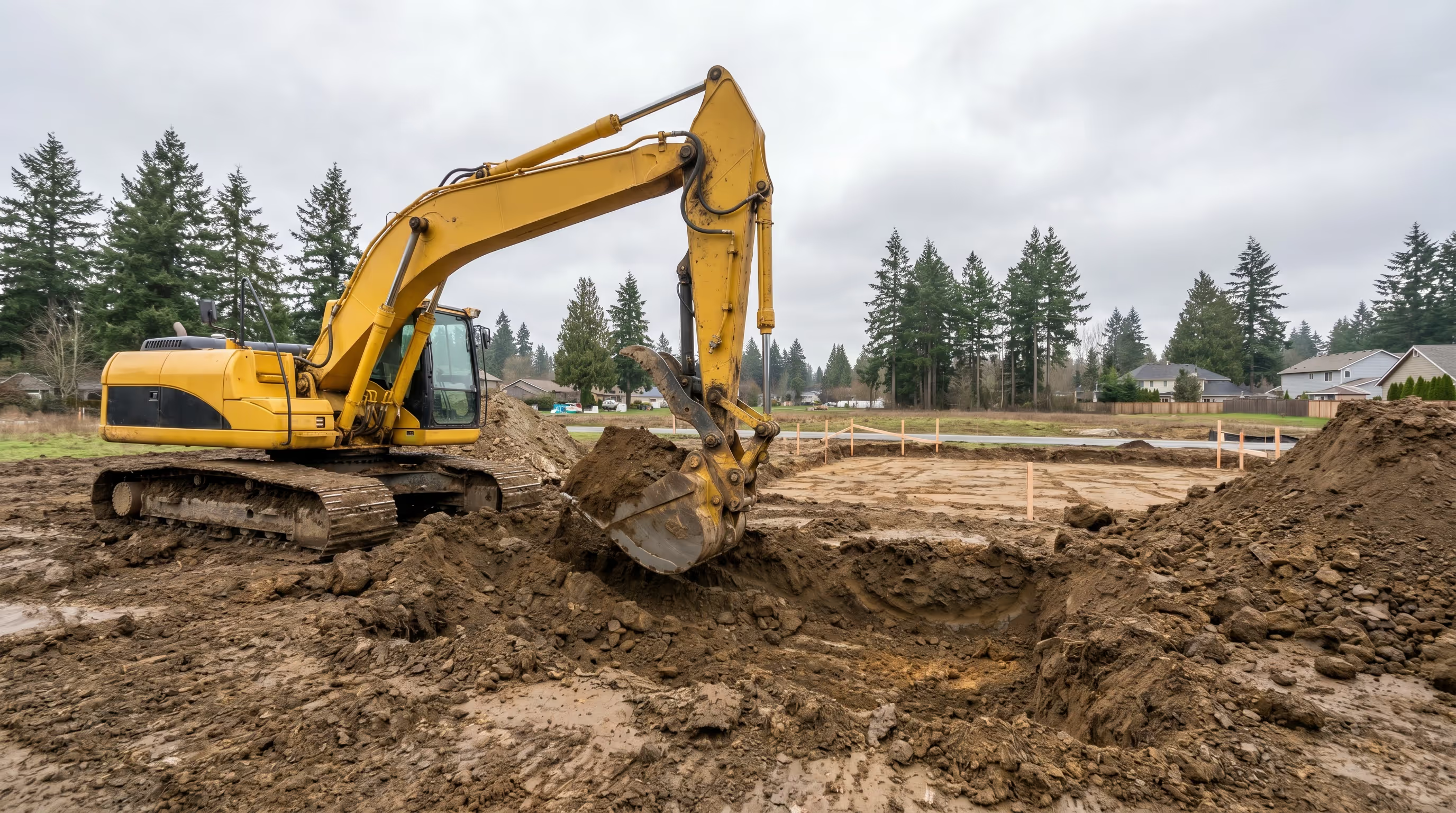
When people ask about excavation cost, they are usually picturing a machine moving dirt. The dig is only part of it. A typical residential or multi family scope can include several distinct activities, and each one carries its own cost:
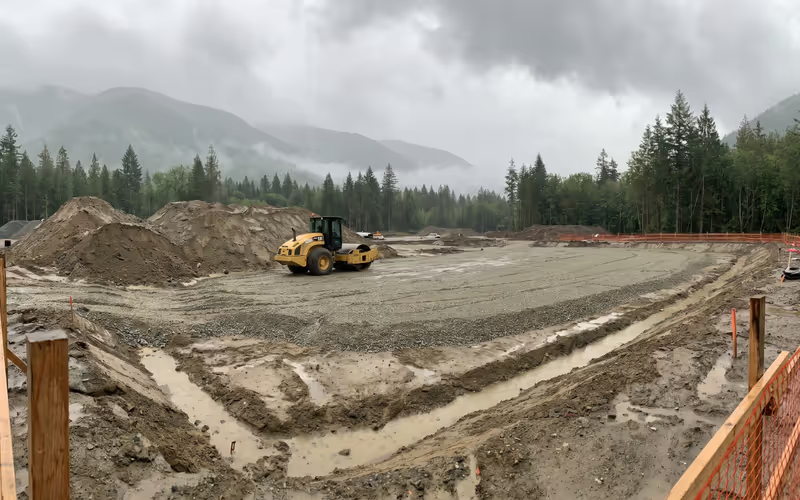
- Clearing and stripping topsoil to reach workable ground.
- Bulk excavation to the elevations shown on the drawings.
- Hauling and legal disposal of excavated material.
- Importing, placing, and compacting structural fill where native soil is not suitable.
- Trenching for utilities, drainage, and services.
- Backfill and rough grading once foundations and services are in.
The mix of these tasks, not a flat rate, is what sets the overall price. A flat lot with good soil and easy truck access sits at one end of the range. A tight, sloped site with poor soil and a long haul to an approved disposal site sits at the other.
The factors that move the number most
Soil and groundwater
Soil is the single biggest variable across the Lower Mainland. Parts of Surrey, Delta, and Richmond sit on soft or high water table ground, which can mean more export of unsuitable material, more imported structural fill, and sometimes dewatering or shoring. A geotechnical report tells everyone what to expect and is the best protection against a price that drifts after the machines arrive.
Volume and disposal
Excavation is largely a volume business. The deeper and wider the dig, the more material has to be loaded, hauled, and tipped. Disposal fees and haul distance to an approved site can be a meaningful share of the total, especially when soil is contaminated or otherwise restricted and has to go to a specific facility.
Access and working room
A machine that can drive straight onto an open lot works faster than one squeezing past neighbouring buildings on a narrow infill site. Limited access affects equipment choice, truck staging, and how quickly material can leave the site, all of which show up in the price.
Scope below grade
Foundations, underground parking, elevator pits, and complex drainage all add depth and detail. The more the design asks for below grade, the more excavation, shoring, and coordination are involved.
Soil conditions across Lower Mainland municipalities
The Lower Mainland is not uniform ground. Knowing the general tendencies of your area helps set realistic expectations before a geotechnical report is in hand.
Surrey spans several distinct soil zones. The western portions near the Fraser River and Mud Bay can include soft marine sediments that require engineered fill or pile foundations. The higher ground in South Surrey and around Newton tends to have more stable till, though even there pockets of variable material appear. Portions of Whalley and Guildford sit on glacial deposits that are generally workable but can vary by lot.
Delta and Richmond are built largely on the Fraser River delta, where the water table is close to surface and soft soil layers are common. Excavation in these areas often involves dewatering and the import of substantial structural fill, both of which add to the budget.
Langley and Abbotsford tend to have better native soil conditions for residential construction, with more till and less soft material than the riverine areas, though site specific variation is always present.
Burnaby and New Westminster have more topographic variation, with slopes that can require shoring or benching to protect adjacent properties. Elevation changes on a tight urban site also affect what equipment can operate and how material is hauled out.
North Vancouver and Coquitlam include steep terrain and rock outcroppings, which introduce the possibility of rock breaking or specialized equipment depending on what the drawings ask for below grade.
None of this replaces a geotechnical report. It is simply context for understanding why the same excavation scope can carry a different price depending on where your site sits.
Permit and regulatory considerations in BC
In British Columbia, excavation on a new build is covered under the building permit for the project rather than a standalone excavation permit in most cases. However, there are related requirements worth knowing.
If excavation is within a certain distance of a neighbouring structure, the local authority and the geotechnical engineer of record may require a temporary shoring design reviewed by a registered professional. In municipalities like Burnaby, Surrey, and Vancouver, infill sites with tight lot lines encounter this regularly.
WorkSafeBC has specific requirements for excavation depth and trench safety. Any excavation beyond a certain depth requires protective measures, which the contractor is responsible for designing and implementing on site. This is worth confirming when you are reviewing any scope of work for your project.
Environmental requirements also apply when excavated material is suspected of contamination. Sites with a history of industrial or fuel use may require environmental testing before soil can be moved off site, and restricted soil must go to an approved facility.
Shoring and protection of adjacent structures
On infill lots in established neighbourhoods, or on multi family sites adjacent to existing buildings, shoring is often part of the excavation scope. Common approaches include timber lagging with soldier piles, secant piles, or sheet piling depending on depth, soil, and proximity to neighbouring structures.
Shoring adds cost, but it is a required element rather than an optional one when the site calls for it. The geotechnical engineer of record specifies what is needed, and the cost is a function of the perimeter length, the depth, and the soil conditions. Getting shoring design into the budget during pre construction, rather than after the building permit is issued, avoids surprises at the worst time.
Dewatering and groundwater management
On sites where groundwater is at or near the excavation level, dewatering is part of the scope. This can involve wellpoints, sump pumps, or more involved systems depending on the flow rates. Discharge from dewatering may require a permit, and the water may need to be tested before it enters the municipal storm system.
Dewatering costs are time based, which means the longer the excavation and foundation stages take, the longer dewatering runs. Planning the excavation and forming sequence tightly is one way to keep dewatering costs within budget.
Why a site visit beats an online estimate
Online calculators can give you a rough order of magnitude, but they cannot see your soil report, your access constraints, or the parts of the design that drive depth. A walk through the site with an experienced operator usually surfaces issues a spreadsheet never would, such as an old foundation in the ground, a service that has to stay live, or a neighbour’s structure that needs protection. That is also the point where a realistic budget, rather than a generic range, becomes possible.
If you are early in planning, pairing excavation input with pre-construction planning helps you set a budget before drawings are final, when changes are still inexpensive.
Reading and comparing excavation quotes
Comparing excavation quotes on a multi family or residential project requires reading past the total number. A few things to check:
The scope of work should specify what is included for each activity: clearing, bulk excavation, haul and disposal, import fill, compaction, trench work, and rough grading. If any of these are described as allowances rather than fixed items, ask how the allowance was determined and what happens if the actual quantity is different.
Disposal assumptions vary between contractors. A quote that assumes fill can be deposited locally at no cost may look very different from one that prices approved disposal hauling. Ask specifically how material leaving the site is handled and priced.
The quote should address how unforeseen conditions are handled. Buried obstructions, contaminated soil, and unexpected groundwater are not unusual. Knowing in advance how these would be identified, reported, and priced protects both the contractor and the owner.
Planning your excavation budget
A few habits make excavation costs more predictable:
- Get a geotechnical report early and share it with everyone pricing the work.
- Confirm where material can be disposed of and how far it has to travel.
- Ask how unsuitable soil, groundwater, or buried obstructions would be handled and priced if they appear.
- Coordinate the dig with forming and services so the schedule does not stall between trades.
- If the site is in an infill area or near existing buildings, get shoring design into the budget during pre construction.
On larger residential and multi family projects, the teams handling excavation and forming need to be in step, because a delay in one usually pushes the other.
Frequently asked questions
Why do excavation quotes vary so much between contractors?
Different assumptions about soil, disposal, and scope can produce very different numbers. When comparing quotes, make sure each one is based on the same drawings and the same geotechnical information, and ask what happens if conditions below grade turn out differently than assumed.
What is the most common reason an excavation cost changes after work begins?
Conditions that were not visible during pricing, such as groundwater, unsuitable soil, or buried material, are the usual cause. A geotechnical report and a clear plan for handling the unexpected are the best ways to limit surprises.
Do I need a geotechnical report before pricing excavation?
For most foundation work it is strongly recommended. It gives everyone a shared understanding of the ground and is the single most useful document for pricing the dig accurately.
Can excavation start before the rest of the team is ready?
It can, but it should be sequenced with forming, services, and the overall schedule. Starting the dig without that coordination often creates gaps that cost time later.
Talking through your site
Jas Construction Ltd. has served the Lower Mainland since 1999, including excavation and site preparation for residential, townhouse, and multi family projects across Surrey, Langley, and surrounding communities. If you want a realistic budget for your lot, the best next step is a site visit and a look at your drawings. Tell us about your project and we will walk through what to expect.
Jas Construction Ltd.
A Surrey, BC construction & excavation group serving the Lower Mainland since 1999.
Let's talk about your next BC build.
Tell us about your scope, timeline and location. We'll send back honest feedback and a quote.