What concrete forming involves, why it matters for structural quality, and how it fits into the overall construction timeline.
Concrete forming rarely gets much attention from owners, yet it sets the dimensions and quality that the rest of the building inherits. Forming is the work of building the molds that shape concrete while it cures, and the accuracy of that work carries through every floor above. This overview explains what forming involves, why it matters, and where it sits in the construction timeline.
Key takeaways
- Forming builds the molds that shape foundations, walls, and structural concrete.
- Accuracy at this stage sets the reference for everything built above it.
- Forming sits between excavation and the vertical structure on the critical path.
- Quality formwork prevents costly finishing, drainage, and structural issues later.
Forming in plain terms
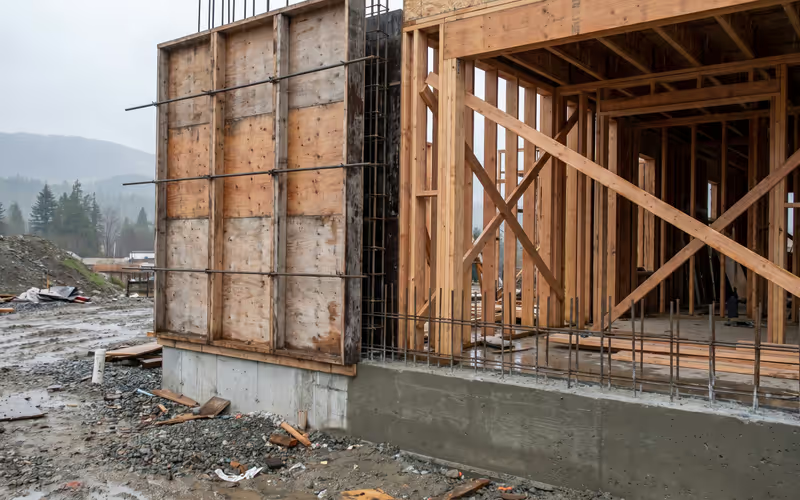
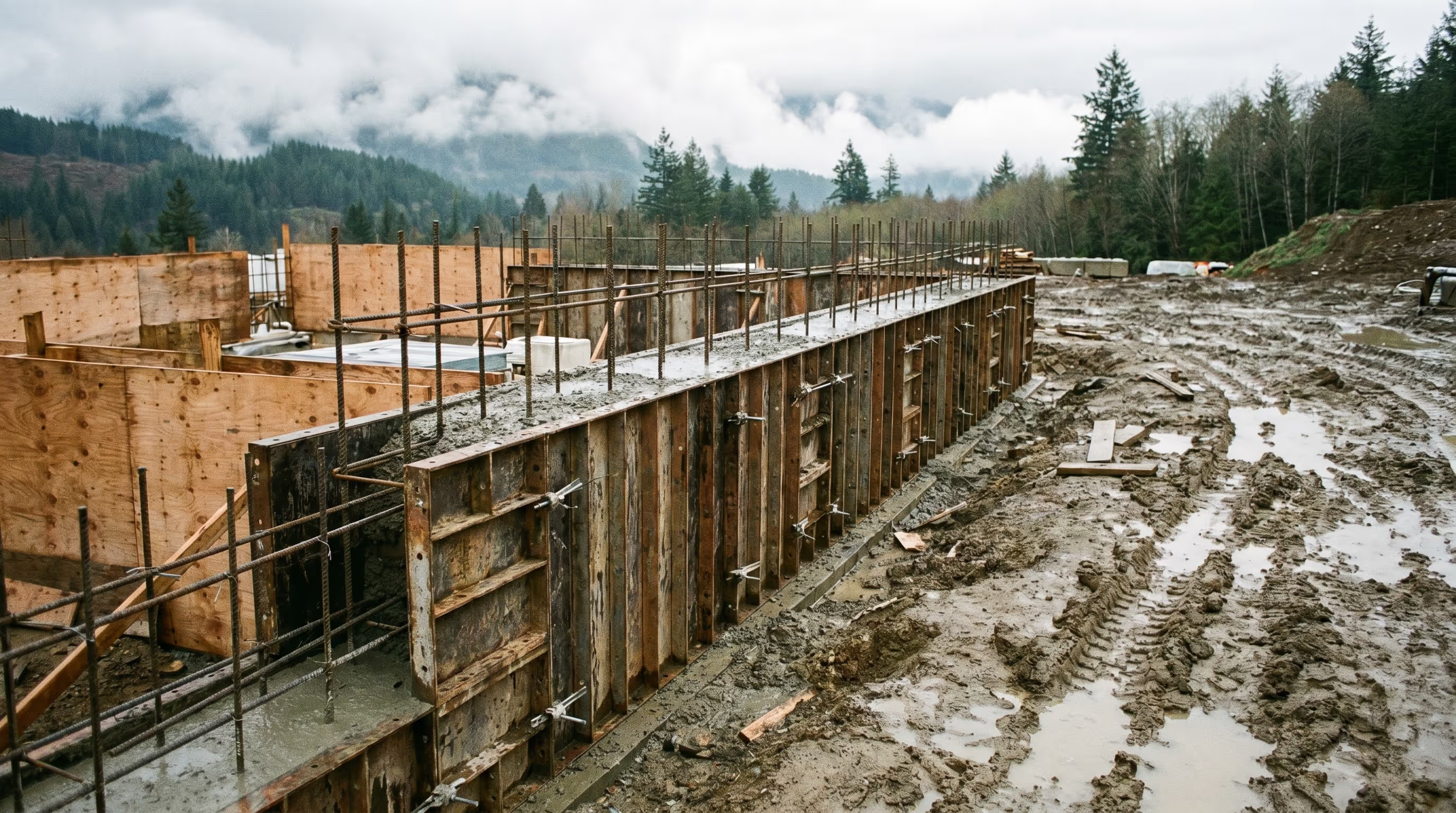
Forming creates the temporary molds, or formwork, that hold fresh concrete until it gains strength. That includes footings, foundations, walls, and other structural concrete elements. Quality forming means straight lines, true dimensions, and proper ties and bracing so walls and foundations perform as the engineer intended. Once the concrete has cured, the forms are stripped and the structure underneath becomes the base for what follows. Our forming services cover this scope across the Lower Mainland.
Why forming quality matters
Because forming sets the dimensions and elevations the rest of the building references, precision here pays off through the entire project. Poorly aligned forms show up later as finishing headaches, water issues, or structural concerns. Skilled form crews work from approved drawings, coordinate embeds and anchors, and plan pours so the concrete is placed safely and correctly. The care taken at this stage is largely invisible in the finished building, which is exactly the point.
How forming fits the schedule
Forming sits between excavation and the vertical structure, so reliable form work keeps the critical path on track. A delay or an inaccurate pour pushes framing and every trade after it. This is why the hand-off from forming to framing matters so much, a theme we explore in how concrete forming and framing fit together. When forming is sequenced and coordinated with the trades around it, the build stays predictable.
Coordinating forming with the wider build
Forming does not happen in isolation. It depends on accurate excavation and subgrade preparation below, and it feeds the framing that rises above. A team that coordinates these stages under one plan, with clear project management, reduces the gaps where time and quality are usually lost.
Frequently asked questions
What is concrete forming?
It is the work of building the molds that hold and shape concrete while it cures, including footings, foundations, and walls. After curing, the forms are removed and the concrete structure remains.
Why does forming accuracy matter?
The rest of the building references the dimensions and elevations the forms establish. Accurate forming lets framing and finishing proceed cleanly, while inaccurate work forces rework upstream.
Where does forming sit in the construction timeline?
Between excavation and the vertical structure. It is on the critical path, so its quality and timing affect framing and every trade that follows.
What makes a good forming crew?
Working accurately from approved drawings, coordinating embeds and anchors, bracing properly, and planning pours so concrete is placed safely and to spec.
Working with us
Jas Construction Ltd. has handled forming scope alongside framing and general construction across the Lower Mainland since 1999. If your project involves structural concrete, we are glad to walk through how we would sequence the work to keep the hand-off to framing clean.
Jas Construction Ltd.
A Surrey, BC construction & excavation group serving the Lower Mainland since 1999.
Let's talk about your next BC build.
Tell us about your scope, timeline and location. We'll send back honest feedback and a quote.